Bell tent manufacturing, from canvas to finished tent
Custom work and volume ranges for leading European brands. In-house woven canvas, chosen for the market the tent is made for.
Every detail is specified before the tent is built
A bell tent is a simple shape. What separates one from another is the combination of details underneath it. Choose any part of the tent.
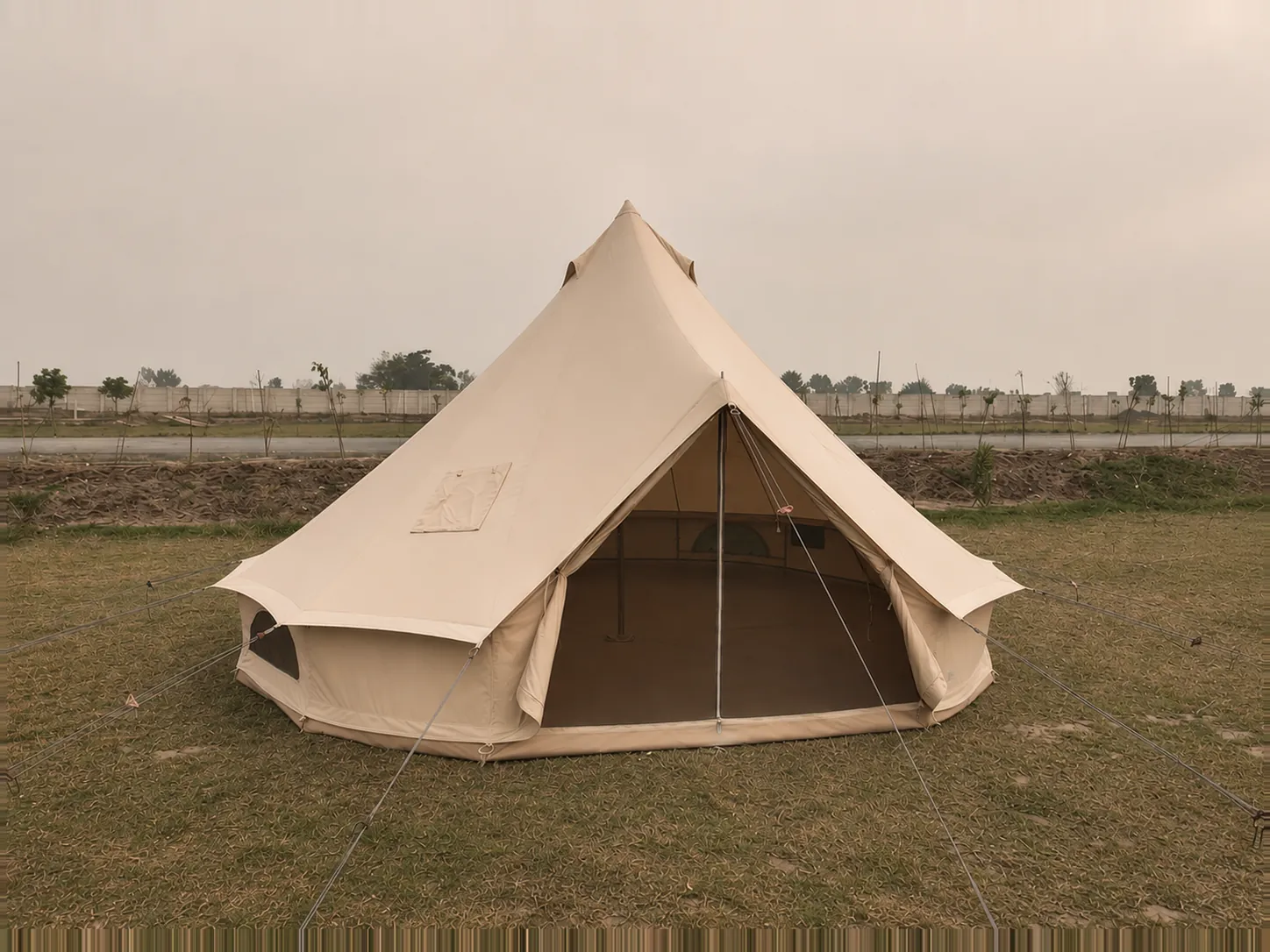
Every detail here is agreed with the client before a tent goes into production.
Request a quote →Top of the tent
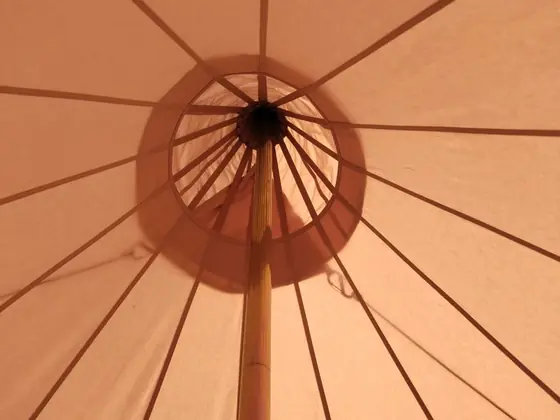
The top is the tent's pressure point — everything the centre pole carries ends up here — and it takes more UV than any other part of the canvas.
In its basic form it is reinforced with PVC to hold that load, with air vents just below it to move air out and keep condensation down. From there it can be built several ways: one of the most common is a top that opens, so a stove flue can pass through.
Cloth & colour
We weave, dye and finish the fabric in house. That is what lets us get the cloth exactly right for the tent you are building.
Poly-cotton or pure cotton, in the weight you want, with the treatments specified separately — water resistance, rot proofing, UV, fire retardancy. A tent that stays pitched all year needs a different specification from one that comes out for a single festival weekend.
Colours are fully customisable, and once a shade is set it can be locked for every production run that follows. Because we dye the cloth ourselves, you don't end up with a different colour batch to batch, or panels that don't match inside the same tent.
Stove jack
An optional stove jack, stitched into the roof panel as a separate square.
It is cut in fire-retardant fabric, sized and positioned for the stove the tent is built around, and closes to stay fully waterproof when no flue is running through it.
Poles
Galvanised steel as standard, aluminium where it is called for.
Wall thickness and material are set to meet the performance your market asks for, weighed against the price the finished tent has to hit. Section lengths are decided with packing size in mind, since that is what governs how the tent ships.
Windows
Window design is one of the details that gives a bell tent its character.
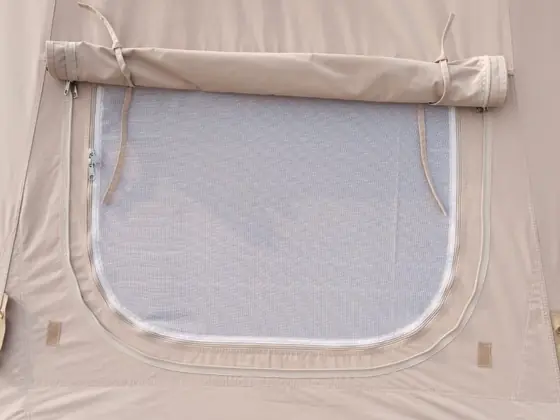
Mesh, zips, transparent panels, large or small — the combination is decided with you, and it changes both how the tent looks and how it feels inside.
Door
The A-frame is the shape most people picture, and it is the part brands change most often.
Wider, squarer, arched or round, with a mesh door behind the canvas and a storm flap in front of it. Height, width and the zip layout are set to how the tent is used, and a second door on the opposite side is an option.
Walls
The wall height defines the silhouette of a bell tent.
Sixty centimetres is the standard in Europe, while eighty is more common in markets such as the United States. Height and material are both set to what the client needs.
Groundsheet
Zipped in, velcro'd in or loose — the fixing decides how the tent is used, cleaned and dried.
PE or PVC, in the weight the ground demands: heavier for tents that stay pitched, lighter where pack size matters. A rain flap folded out under the wall keeps water from tracking in at the seam.
Ropes, pegs & fittings
Everything that ships with the tent is specified alongside it.
Guy ropes in the diameter, colour and tensioner you want, reflective or plain. Pegs from light pins to heavy steel, chosen for the ground the tent stands on. Carry bags, pole bags, inner tents, mud flaps and repair patches — branded to your artwork or supplied blank.
Fly sheet
A second layer of canvas over the roof, cut for the tent underneath it.
It keeps the sun off the canvas, holds the temperature down inside, and carried forward it gives a shaded porch in front of the door. Same cloth and colour as the tent, or a contrast.
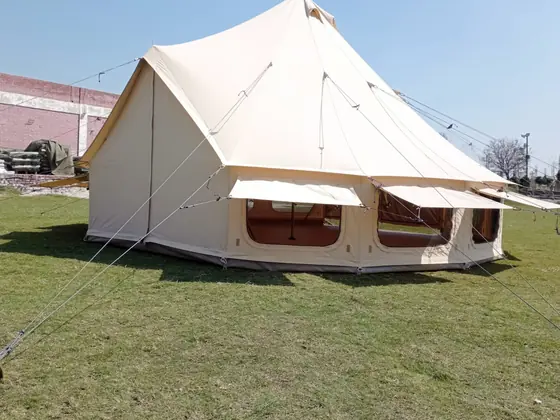
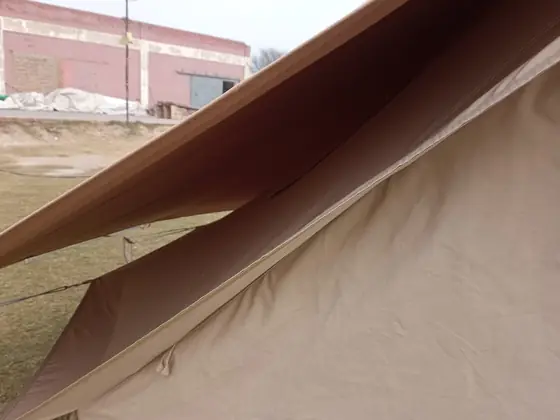
The fabric is where a bell tent starts
Every fabric we build with is woven, dyed and finished in our own facilities. Above a certain volume we develop a blend exclusively for your brand — a cloth nobody else can order.
Dyed to your colour and finished to your requirement: rot proofing, water repellency, waterproofing and colour fastness, to the standards set by the major European fabric brands.
Standard polycotton50/50 or 65/35280–285 gsmMainstream bell tents
- Tear strength, warp × weft
- 2.5 × 2.5 daN
- Tensile strength, warp / weft
- 100 / 70 daN
- Water column
- 300 mm
- Colour fastness
- ≥ 4
- Rot & mildew
- Treated
- Shrinkage
- ≈ 2%
- Fire retardant
- On request
Standard cotton100% cotton280–300 gsmClassic bell tents
- Tear strength, warp × weft
- 1.5 × 1.5 daN
- Tensile strength, warp / weft
- 70 / 80 daN
- Water column
- 300 mm
- Colour fastness
- > 4
- Rot & mildew
- Treated
- Fire retardant
- On request
Premium cotton100% cotton310–340 gsmQuality camping and glamping
- Construction
- Twisted yarn
- Tear strength, warp × weft
- 3.0 × 2.5 daN
- Tensile strength, warp / weft
- 130 / 130 daN
- Water column
- 400 mm
- Colour fastness
- > 4
- Rot & mildew
- Treated
- Fire retardant
- On request
Heavy polycotton50/50 or 65/35360–420 gsmSemi-permanent and professional use
- Tear strength, warp × weft
- 6.0 × 3.5 daN
- Tensile strength, warp / weft
- 160 / 120 daN
- Water column
- 450 mm
- Colour fastness
- ≥ 4
- Rot & mildew
- Treated
- Shrinkage
- ≈ 2%
- Fire retardant
- On request
Inherently fire-retardant canvasSpecial fibre blend290–480 gsmFestivals, public accommodation and commercial glamping
- Fire retardancy
- Inherent, not a treatment
- Tear strength, warp × weft
- 5.0 × 2.0 daN
- Tensile strength, warp / weft
- 150 / 100 daN
- Water column
- 400 mm · 600 mm coated
- Colour fastness
- ≥ 4
- Rot & mildew
- Treated
Figures shown are typical for the class. Every fabric is made to order, and the final specification is confirmed against your requirement.
Built to the standard bell tent sizes
At M. Bilal Textiles we follow the global standards of bell tent manufacturing. The ratio between diameter and height is what gives a bell tent its silhouette, and holding that ratio is what keeps the proportions right at every size.
It also keeps the tent compatible with the rest of the market: fly sheets, inner tents, liners and groundsheets made to the same standards fit without modification.

Every tent is made to order, so sizes outside these standards are equally possible. Technical drawings and 3D sketches are provided with every request. Scroll the drawing sideways.
Ask about a size that isn't here →Details that give a bell tent its identity
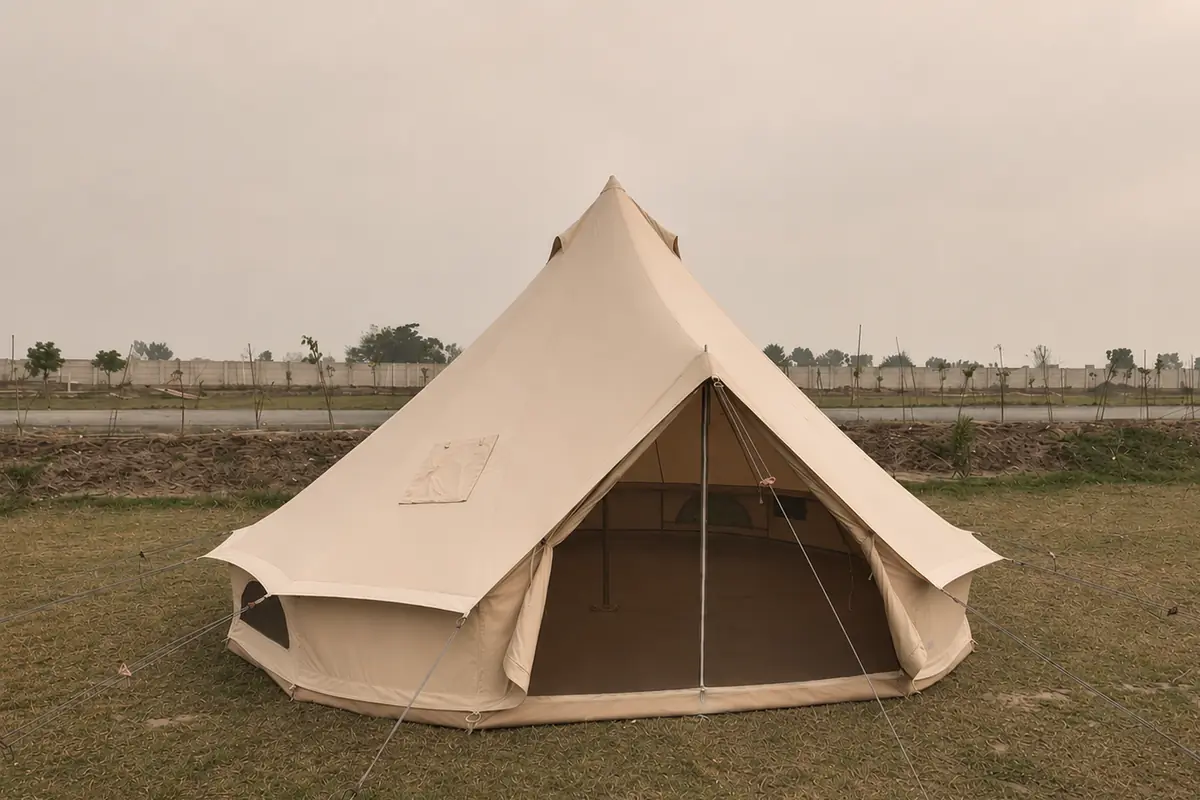
Every one of these is the same bell tent. What separates them is the wall height, the door, the mesh, the windows, whether there is a stove jack in the roof and what went over the top — all decided before anything was cut.
Black mesh + stove jack
Where most specifications start. A sixty centimetre wall, black mesh behind the openings, and a stove jack set into the roof panel — which is what lets a site sell the tent through the cold months as well as the warm ones.
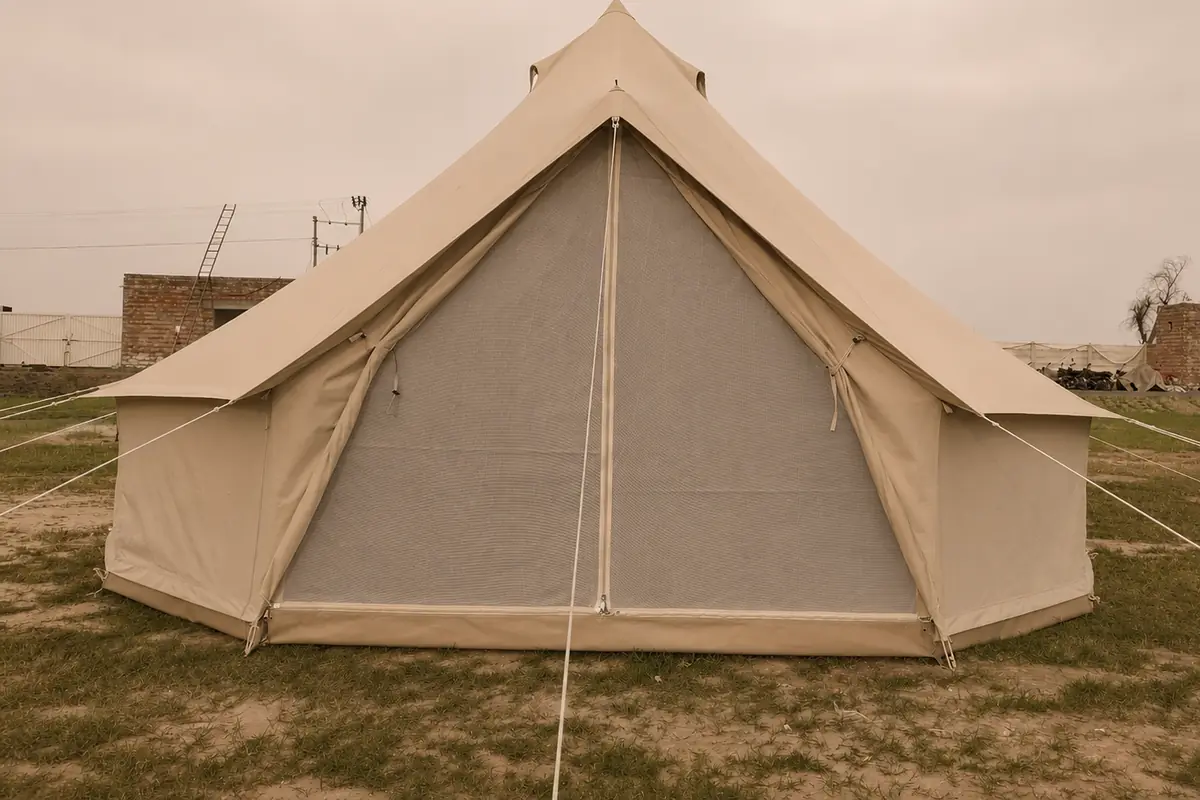
Strong mesh door
The mesh door keeps dirt and mosquitoes out while the canvas door stays open. This one was designed for intensive festival use, where the door is opened dozens of times a day and not always carefully. We reinforced it with extra cotton alongside the zip to prevent damage — a small detail with a large effect on how the tent holds up in service.
80 cm wall height
Twenty centimetres more wall changes what fits along the edge of the tent. Same footprint, same poles, a different tent to sleep in. White mesh keeps the inside bright; black disappears from outside. That part is aesthetic.
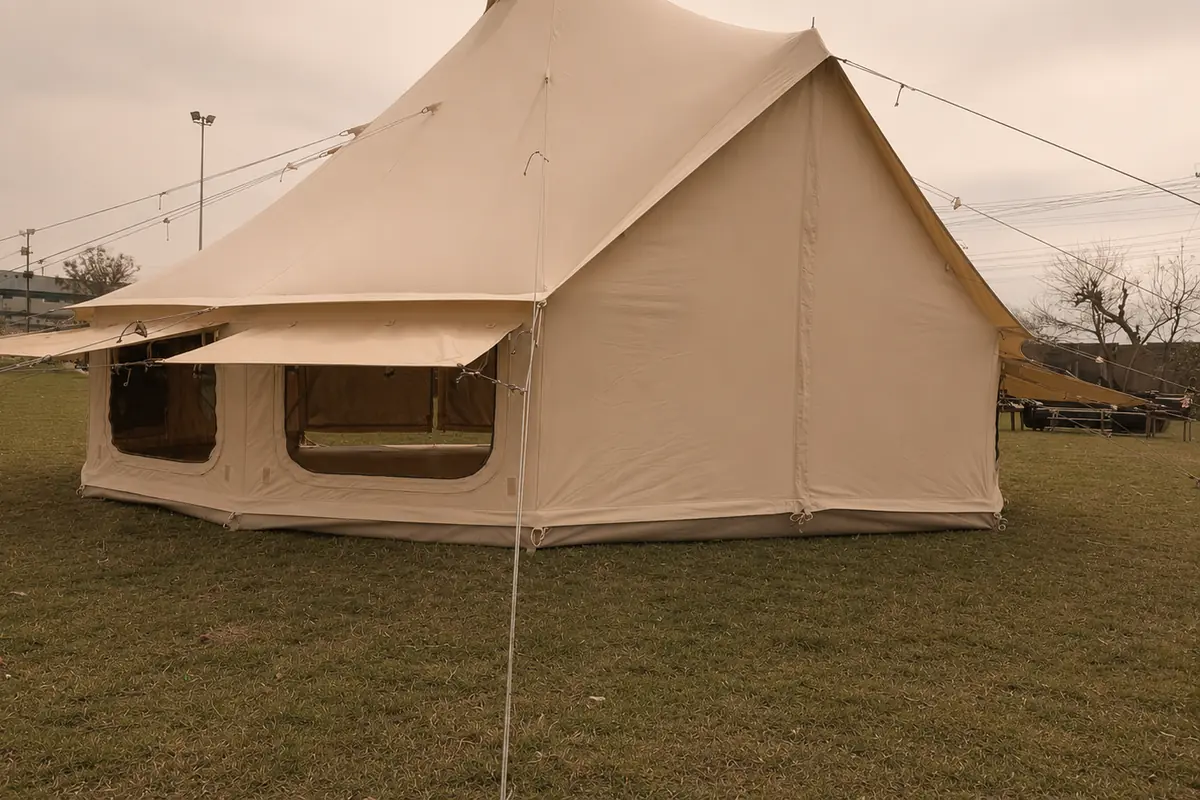
Big panorama windows
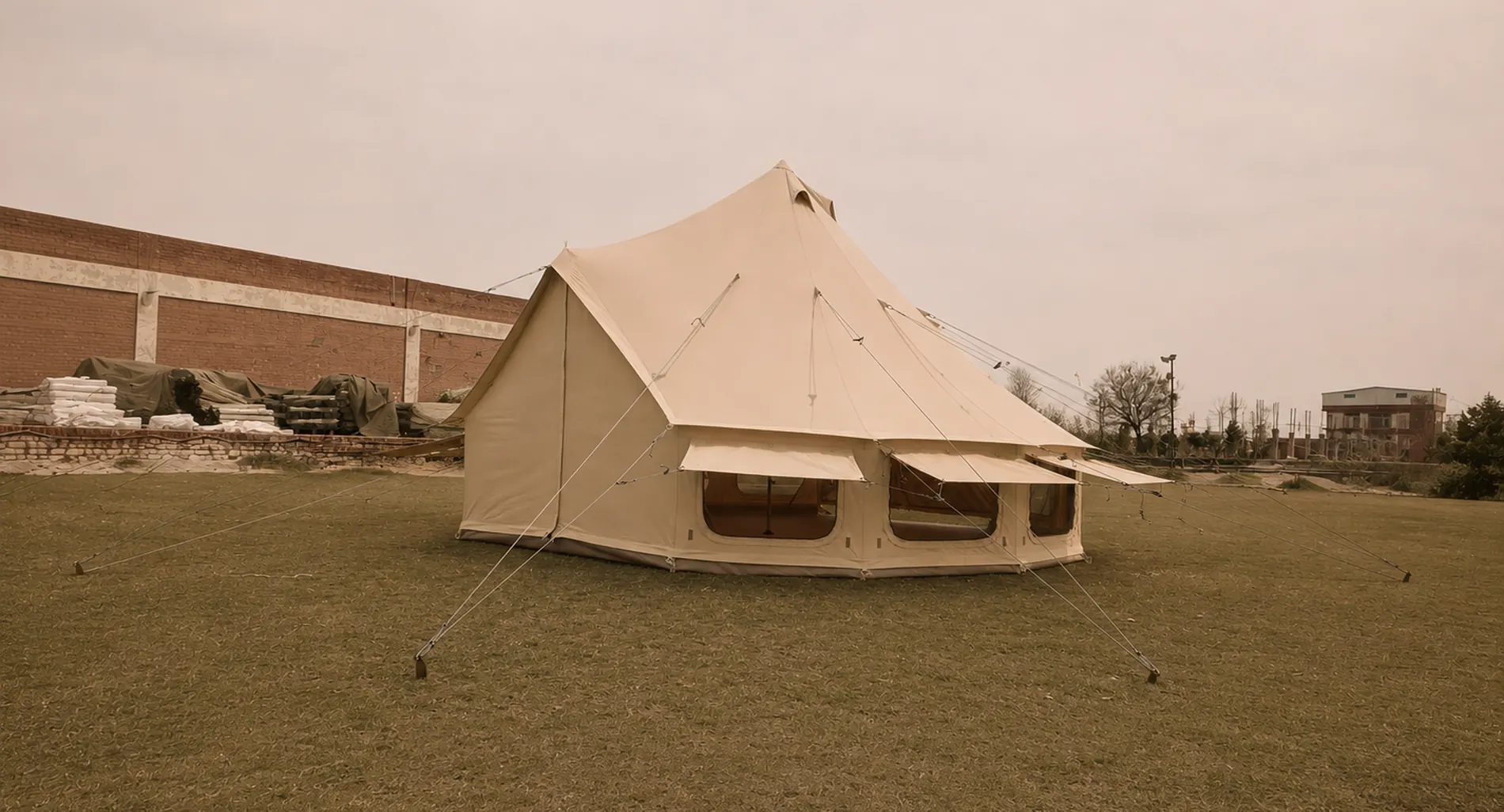
Windows that run along the wall and prop out on their own poles, so they shade themselves and stay open when it rains. It is the single biggest change you can make to how a bell tent feels from the inside.
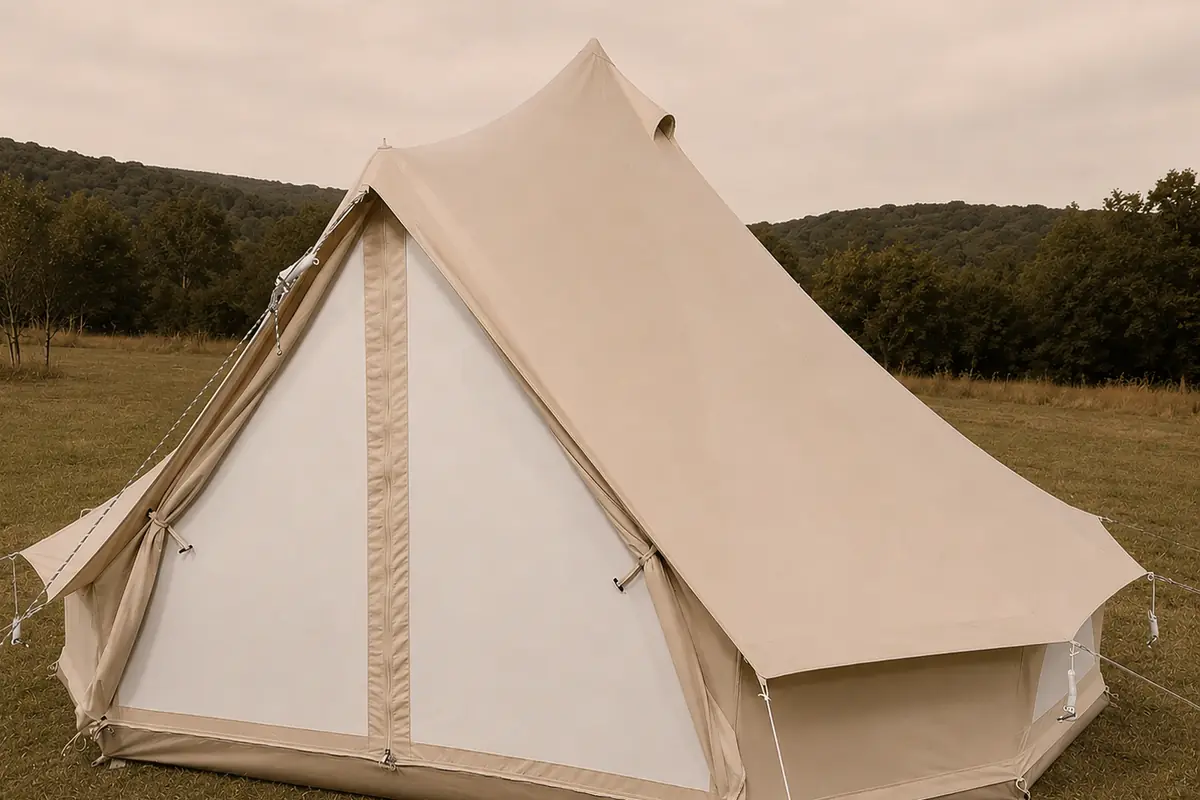
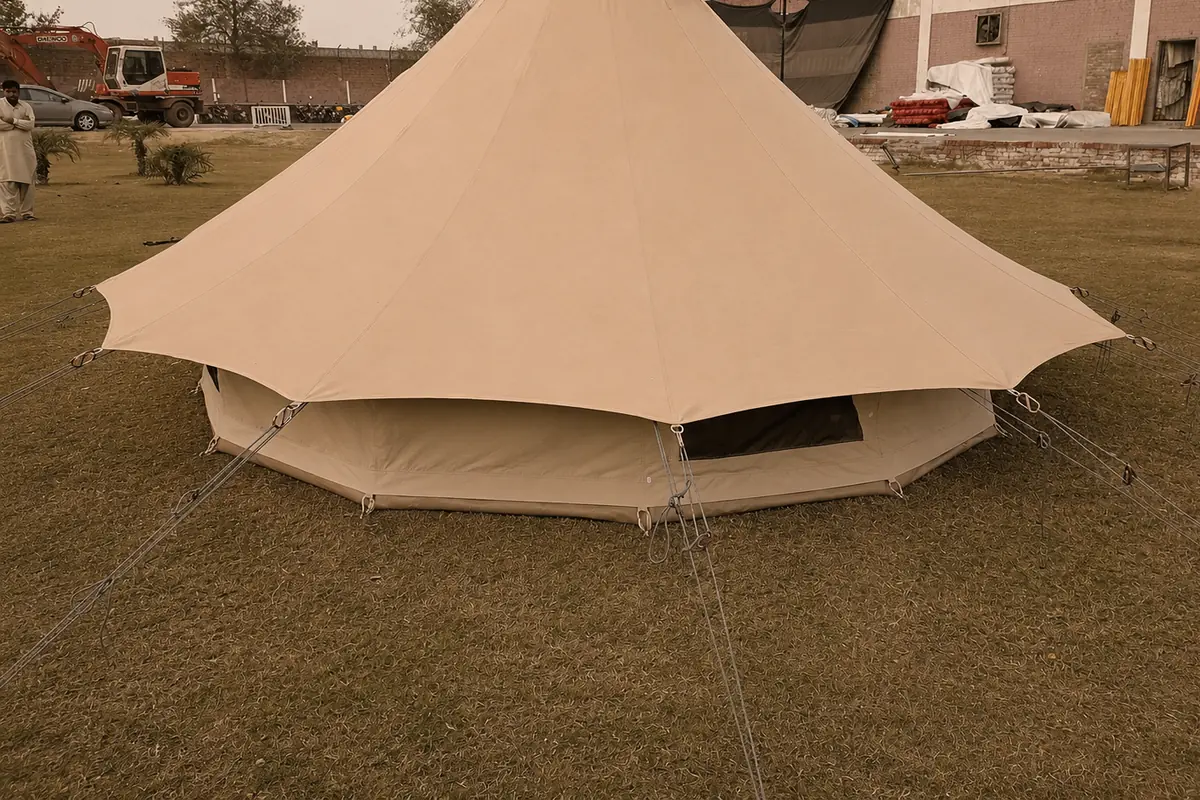
Canvas fly sheet
The same tent with a second layer of canvas over the roof. It changes the silhouette, the temperature inside, and how many seasons the roof lasts.
Building a bell tent range? Let us quote it.
Tell us the diameter, the fabric, the colour and the details that matter in your market. A drawing or a photograph is enough to start from. Our sales team returns a detailed quotation with the technical documentation to go with it.
Or contact us directly: +92 321 8667745 · ibrahim@bilaltextiles.net